Seafood shapes much of what you taste in Portugal, and you notice it the moment you sit at a table near the coast. With over 1,200 km (around 750 miles) of Atlantic shoreline, the country built its culinary identity around the ocean. Five dishes — bacalhau à Brás, amêijoas à Bulhão Pato, arroz de marisco, polvo à lagareiro and sardinhas assadas — stand out as defining examples of Portuguese seafood cuisine.
You encounter cod salted and preserved for centuries, clams simmered with garlic and olive oil, and rice stews brimming with shellfish. Each plate reflects a tradition passed down through generations, yet remains simple enough to let the natural flavours shine. These dishes are not only staples in restaurants but also favourites in homes across the country.
Exploring them gives you more than a taste of Portugal — it connects you to the history of fishing villages, the influence of Mediterranean cooking, and the pride locals take in preparing seafood with care. By the end, you'll know exactly which five dishes represent the heart of Portuguese cuisine and why they remain essential today.
1,200 kmof Atlantic coastline
300+ways of preparing bacalhau across the country
2011arroz de marisco named one of the 7 Wonders of Portuguese Gastronomy
The Role of Seafood in Portuguese Culinary Tradition
Seafood shapes the flavours, techniques and identity of Portuguese cooking. You encounter it in everyday meals, festive gatherings and regional specialities that highlight the Atlantic's abundance.
Historical Influence of the Atlantic Ocean
Portugal's long Atlantic coastline provided reliable access to fish and shellfish for centuries. Fishermen developed preservation methods like salting and drying to secure food for long voyages, which explains why bacalhau (salted cod) became a national staple despite not being native to local waters.
During the Age of Discoveries, sailors relied heavily on preserved fish for sustenance. This habit later influenced household kitchens, where cod remains central to countless recipes. You still find over 300 variations of bacalhau prepared across the country.
Other species such as sardines, mackerel and horse mackerel filled markets and family tables. Grilled sardines, especially during summer festivals, show how maritime traditions continue to blend history and daily life.
Cultural Importance of Seafood in Portugal
Seafood carries cultural weight beyond nutrition. You see it celebrated at festivals like the Festas de Lisboa, where grilled sardines dominate street stalls. These events reinforce communal ties and reflect how food anchors social traditions.
Many Portuguese families pass down recipes such as caldeirada de peixe (fish stew) or arroz de marisco (seafood rice). Preparing these dishes often involves shared cooking, turning meals into cultural rituals.
Religious practices also shaped habits. During Catholic fasting periods, fish replaced meat on the table. This explains why cod, octopus and cuttlefish hold symbolic value in holiday meals like Christmas Eve dinner.
Regional Variations in Seafood Dishes
Different coastal regions developed distinct specialities. In the north, you encounter lamprey rice and hearty fish stews, reflecting river and ocean influences. Lisbon's markets highlight shellfish such as clams and mussels, often cooked with garlic, olive oil and white wine.
The Algarve emphasises grilled fish like sea bream, and octopus, often served with simple accompaniments. Further inland, preserved cod dominates, since fresh seafood was historically harder to transport.
| Region |
Notable dish |
Key ingredient |
| North |
Lamprey rice |
River lamprey |
| Lisbon area |
Amêijoas à Bulhão Pato |
Clams |
| Algarve |
Polvo à lagareiro |
Octopus |
| Nationwide |
Bacalhau à Brás |
Salted cod |
These variations show how geography and tradition shaped iconic dishes such as bacalhau, sardinhas assadas, caldeirada de peixe, arroz de marisco and polvo à lagareiro. Each reflects a different aspect of Portugal's maritime heritage.
Bacalhau à Brás: Portugal's Iconic Salted Cod Dish
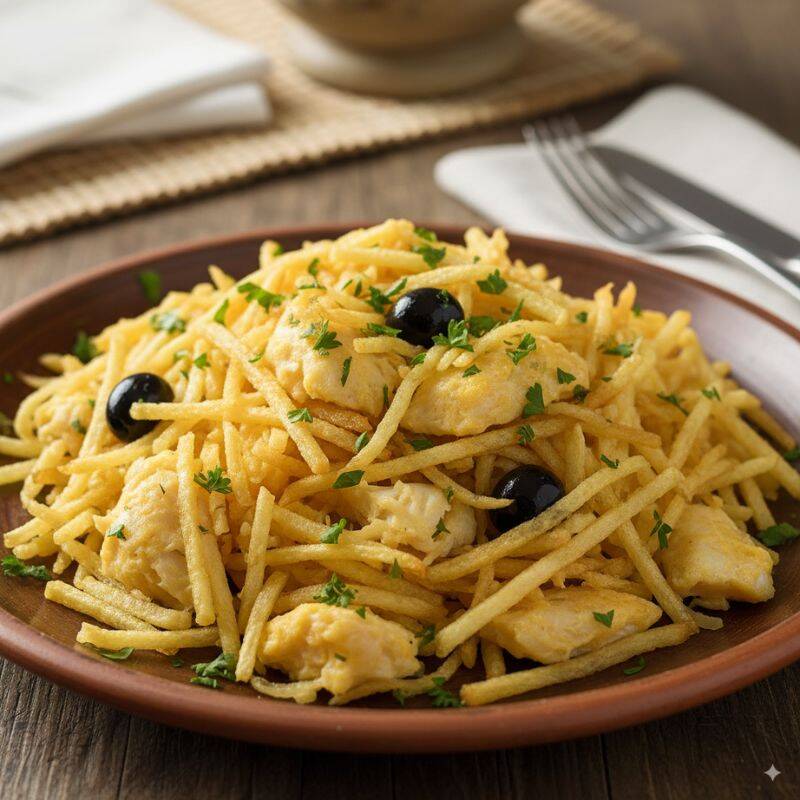
You encounter a dish that blends salted cod with potatoes, onions and eggs in a way that balances texture and flavour. Its roots lie in Lisbon, but its popularity spread across the country, making it one of the most recognisable seafood preparations in Portuguese cuisine.
Origins and History of Bacalhau à Brás
You can trace bacalhau à Brás back to Lisbon's Bairro Alto, where a tavern owner named Brás (sometimes spelled Braz) created it in the 19th century. He combined leftover salted cod with fried potato strips and eggs, producing a dish that quickly gained favour among locals.
Salted cod had already been central to Portuguese cooking for centuries. Thanks to its long shelf life, sailors carried it on voyages, and families relied on it before refrigeration existed. This explains why Portugal developed hundreds of cod recipes, with bacalhau à Brás standing out as one of the simplest yet most enduring.
Today, you find it not only in Lisbon but also in homes and restaurants throughout Portugal. Its humble beginnings as tavern food contrast with its current status as a staple of national identity.
Key Ingredients and Preparation Methods
- Salted cod (about 500 g / 1 lb), soaked in water for 24–48 hours to remove excess salt
- Potatoes, cut into thin matchsticks or bought as batata palha (shoestring fries)
- Onions, sliced finely and sautéed until soft
- Eggs, lightly beaten to create a creamy texture
- Olives and parsley for garnish
Start by cooking the onions in olive oil until golden. Next, add the flaked cod and stir until heated through. The potatoes provide crunch, while the eggs bind everything together. Timing matters: remove the pan from the heat before the eggs overcook, leaving them slightly silky instead of dry.
Tip
Keep the potatoes crisp by adding them just before the eggs. This keeps the dish balanced between softness and crunch.
Serving Traditions and Occasions
You usually see bacalhau à Brás served as a main dish at family gatherings, casual dinners or even festive occasions. It often comes to the table in a large pan, topped with black olives and sprinkled with fresh parsley.
Restaurants across Portugal include it on their menus, from small taverns to more refined establishments. In Lisbon, locals still consider it a signature dish of the city. Pair it with a crisp white wine such as vinho verde, which complements the saltiness of the cod and the richness of the eggs. Because the recipe uses affordable ingredients, it remains easy to prepare at home, making it one of the most approachable dishes of Portuguese cuisine.
Amêijoas à Bulhão Pato: The Essence of Portuguese Clams
This dish highlights the Portuguese ability to elevate simple ingredients into a refined seafood speciality. You taste freshness from the ocean balanced with herbs, citrus and olive oil that reflect the coastal traditions of Lisbon.
Signature Flavours and Ingredients
Amêijoas à Bulhão Pato is made with fresh local clams, which bring a naturally sweet and briny taste. The sauce relies on extra virgin olive oil, garlic, coriander and lemon juice. Many cooks also add a splash of vinho verde or another dry white wine to brighten the flavours.
The combination of garlic and coriander creates a sharp yet refreshing profile. Unlike heavier seafood stews such as caldeirada de peixe, this recipe stays light, making it popular as both a starter and a main dish.
Clams must be scrubbed and soaked in salted water for at least 30 minutes to remove sand. You then steam them quickly in the sauce until they open, which usually takes less than 10 minutes. Serve immediately to capture the aroma and texture at their peak.
A fun detail: the dish takes its name from the 19th-century poet Raimundo António de Bulhão Pato, a noted gourmet who helped popularise it in Lisbon taverns.
Popular Pairings and Regional Twists
You often enjoy this dish with crusty bread to soak up the sauce. In many Lisbon tascas, it arrives alongside a chilled glass of vinho verde or a crisp lager, which balances the citrusy sauce while cutting through the richness of the olive oil.
In the Algarve, some cooks replace coriander with flat-leaf parsley, creating a milder flavour. On the Setúbal coast, lemon wedges are served generously, emphasising acidity. For a fuller meal, combine amêijoas à Bulhão Pato with other seafood classics such as arroz de marisco or sardinhas assadas.
Tip
If preparing them at home, choose clams that feel heavy for their size and close tightly when tapped. This ensures freshness and avoids grit in the final dish.
Arroz de Marisco: The Portuguese Seafood Rice Experience
This dish brings together the richness of the Atlantic with the comfort of rice, creating a meal that is both filling and deeply tied to coastal traditions. Its flavour depends on the freshness of the shellfish, the quality of the broth and the care taken during preparation.
Varieties of Seafood Used
You will usually find prawns, clams, mussels and crab in a typical arroz de marisco. Some versions also include lobster or squid, depending on what is available at the market. Restaurants along the coast often adapt the dish to local catches: in central Portugal, cockles are common, while in the Algarve you might see razor clams. A helpful tip is to combine at least three different shellfish for a more rounded taste.
Cooking Techniques and Broth Preparation
The broth forms the backbone of arroz de marisco. You start by simmering shells and heads from prawns or crabs with onions, garlic and bay leaf. This creates a rich stock that infuses the rice with flavour.
Unlike paella, the rice here stays moist and closer to a stew. You use varieties like Carolino or Agulha, which absorb liquid without losing structure. Cooking usually takes 20–25 minutes, with stock added gradually to maintain a soupy consistency. Tomatoes, peppers and a touch of white wine add acidity that balances the sweetness of the seafood, and a sprinkle of fresh coriander at the end lifts the aroma.
Tip
For a stronger flavour, roast the shells before making the broth to intensify the base.
Festive Occasions for Arroz de Marisco
You will often see arroz de marisco served at family gatherings, weddings and summer festivals. Its generous portions make it ideal for sharing. In coastal towns, it is common at marisqueiras, casual seafood restaurants where locals gather at weekends, and visitors seek it out as one of the 7 Wonders of Portuguese Gastronomy, a title awarded in 2011. Served in a large clay pot with chilled vinho verde, it is complete and authentically Portuguese.
Polvo à Lagareiro and Sardinhas Assadas: Celebrating Octopus and Sardines
Polvo à Lagareiro
You prepare polvo à lagareiro by first simmering the octopus until tender, often with onion or bay leaf. Once soft, the tentacles go into the oven with smashed potatoes, garlic and generous amounts of olive oil. This method, known as à lagareiro, makes olive oil the defining element. The potatoes, lightly crushed before roasting, absorb the oil and juices released by the octopus, balancing the briny flavour of the sea with the earthy taste of the potato.
Tip
If you want the octopus extra tender, freeze it before cooking. The ice crystals break down the muscle fibres, making the texture softer without long cooking times.
Sardinhas Assadas During the Festas Populares
You find sardinhas assadas most celebrated during the Santos Populares in June, especially in Lisbon and Porto. Grilled over open charcoal, the sardines are placed directly on bread, which soaks up the juices and oil. The sardines are rarely marinated; instead, coarse sea salt is sprinkled just before grilling, keeping the flesh firm and enhancing the natural flavour.
During the festivals, you eat sardines standing outdoors, often with a glass of red wine or beer. The bread underneath doubles as both plate and side dish, making the meal practical and deeply traditional.
Monte Mar
Whether in Lisbon or Cascais, at Monte Mar you can find at least three of these five great Portuguese dishes: amêijoas à Bulhão Pato, arroz de marisco and polvo à lagareiro — all of above-average quality and prepared with our chefs' outstanding technique. See the Monte Mar Lisboa menu and the Monte Mar Cascais menu.
Whether for a relaxed lunch or a special romantic dinner, at Monte Mar you can enjoy the best that Portugal's cuisine and natural beauty have to offer. To learn how to recognise genuinely fresh fish, read our guide on where to eat fresh fish in Lisbon.
Enjoy the best of Portuguese cuisine at Monte Mar, in Lisbon or Cascais.
Frequently Asked Questions
Portuguese seafood highlights the close connection between the sea and daily life. You find dishes that showcase fresh fish, shellfish and traditional cooking methods passed down through generations.
What are the traditional seafood dishes one must try when visiting Portugal?
You should taste grilled sardines, especially during the summer festivals in Lisbon. Arroz de marisco (seafood rice) is another essential, rich with prawns, clams and mussels. Amêijoas à Bulhão Pato, clams in garlic, olive oil and coriander, is simple yet iconic.
Which Portuguese seafood recipes are considered classic in local cuisine?
Bacalhau à Brás, made with salted cod, onions, potatoes and eggs, remains a staple in many homes. Polvo à lagareiro, roasted octopus drizzled with olive oil, is widely loved. Caldeirada, a fisherman's stew, combines several fish with potatoes, peppers and tomatoes for a hearty meal.
How does seafood influence the overall culinary landscape in Portugal?
You notice seafood shaping both everyday meals and festive gatherings. Coastal towns rely heavily on the catch of the day, while inland regions adapted preserved fish like salted cod. This balance keeps seafood central to Portuguese identity.
Can you list some seafood dishes from Portugal that reflect the country's coastal heritage?
Sardinhas assadas reflect Lisbon's maritime culture. The Algarve offers cataplana de marisco, cooked in a traditional copper pan that traps steam and flavour. In the north, lamprey rice shows how rivers also influence Portuguese seafood traditions.
What ingredients are commonly used in Portuguese seafood dishes?
Olive oil, garlic, onions and fresh herbs like coriander and parsley appear frequently. Tomatoes, peppers and potatoes often accompany fish or shellfish. You also find rice and bread used as bases for stews and soups.
Are there any seafood dishes from Portugal that have gained international recognition?
Bacalhau in its many forms has become known worldwide, with hundreds of recipes in Portugal alone. Grilled sardines attract attention during Lisbon's annual festivities. Seafood rice also appears on menus in Portuguese communities abroad, making it a recognisable dish outside the country.